

Builder Residential House Plans Under 200m2 for NSW & QLD
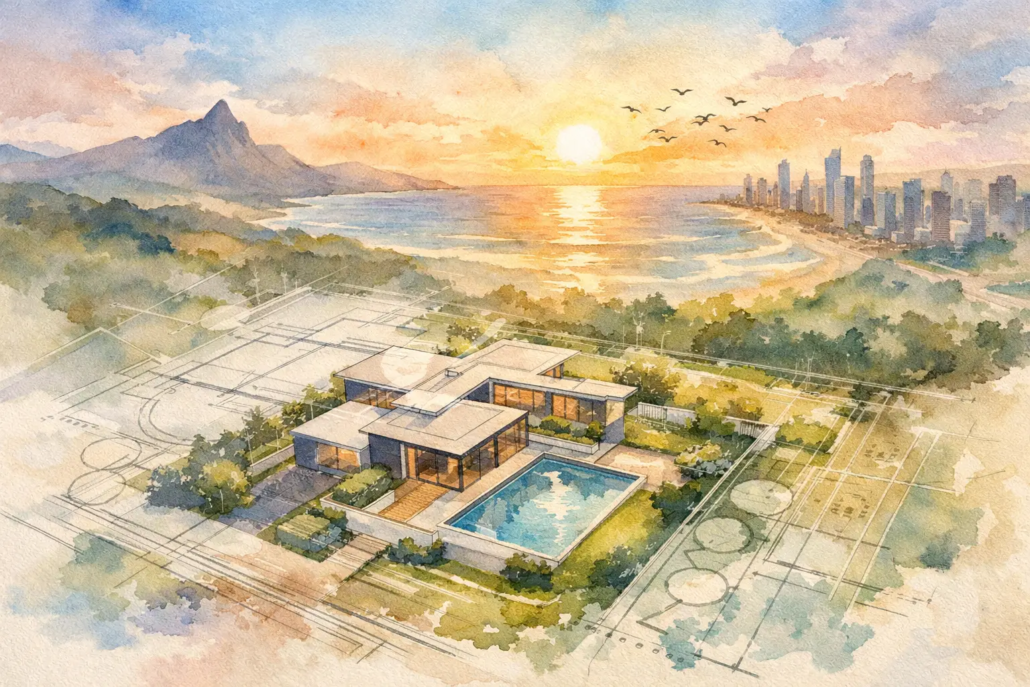
Smaller homes are not the budget compromise they used to be. In the right hands, builder house plans under 200m2 Gold Coast Sunshine Coast Sydney Armidale Grafton Coffs Harbour can outsell bigger, clumsier homes because buyers are chasing smarter space, stronger street appeal and layouts that do not feel like recycled brochure stock. That is exactly where sharp builders and switched-on home buyers can gain ground – with homes that feel original, commercially sensible and easy to adapt for local demand.
This is not about squeezing rooms into a box. It is about getting the plan right from the start so the home reads well on paper, builds efficiently and still has the punch to stand apart in a crowded market. Under 200m2 can be a serious sweet spot for project builders, boutique builders and owner-builders alike, especially when land prices are doing the heavy lifting in coastal and regional markets.
Why builder house plans under 200m2 work in Gold Coast, Sunshine Coast, Sydney, Armidale, Grafton and Coffs Harbour
These markets are not identical, and that matters. Gold Coast and Sunshine Coast buyers often want relaxed open-plan living, strong indoor-outdoor flow and facades that feel fresh rather than fussy. In Sydney, tighter lots and sharper construction costs put more pressure on every square metre. Armidale, Grafton and Coffs Harbour can lean more practical, but practical does not mean plain. It means the plan has to earn its keep.
That is where under 200m2 plans become commercially attractive. They can lower build costs, help maintain margin and suit a wider buyer pool, but only if the layout avoids the usual traps – long dark corridors, oversized circulation zones, awkward bedroom placement and living areas that look generous in a brochure yet feel cramped once furnished.
This is clearly evident in the design from the Homestarter range being the Campaign 182, ask yourself what kind of design a builder would create with five living rooms in a modest, compact 182m² footprint. It all comes down to the details—how the layout flows, where and how walls are placed to achieve style, and how to minimize wasted space like hallways, putting more of the area back into habitable spaces where it truly makes a difference.
The better approach is to make the footprint feel bigger than the number suggests. That comes from alignment, sightlines, natural light and roof-driven form, not from adding bulk for the sake of it. Cookie-cutter plans miss this. Smart builders do not.
The real difference is not size – it is layout intelligence
A 185m² home with a smart, open layout can feel more upscale than a 215m² home that squanders space. Buyers pick up on it instantly, even if they can’t say exactly why. The kitchen functions beautifully, placed as the true heart of the home rather than an afterthought. The living rooms enjoy light, and the smaller bedrooms are tucked away for added privacy. The entire space feels more thoughtfully designed.
For builders, that is where the commercial upside sits. You are not just buying a plan. You are buying a point of difference you can market in your area. With exclusive design rights options, editable CAD and DWG files, and flexible ways to access plans, the model suits builders who want fresher stock without carrying the burden of stale catalogue housing.
For home buyers and owner-builders, the benefit is different but just as clear. You can start with a professional concept that already understands proportion, liveability and street presence, then adapt it to suit site orientation, local climate and council expectations.
What to look for in under 200m2 house plans before you buy or license
The first test is whether the home feels open without becoming one big undefined room. Open-plan living still needs shape. A kitchen that anchors the main space properly will always perform better than one dropped into a leftover corner. The second test is whether bedrooms and bathrooms are placed with some dignity. If every door opens into a traffic path, the home may be compact, but it will not feel calm.
Storage is another pressure point. Under 200m2 plans need robes, linen and pantry space designed in from day one. Of more importance is the amount linen and/or broom cupboard space/s incorporated into the plan is it enough? If storage is treated as an afterthought, the home quickly starts feeling tight. The same applies to the laundry. In smaller homes, this space has to work hard without becoming a visual nuisance.
Then there is facade and roof form. Plenty of small homes fall flat because the front elevation is bland and the roofline lacks conviction. That is a mistake. A home under 200m2 still needs drama and rhythm. In many cases, it needs it even more because the design has less bulk to rely on.
Design range examples that prove smaller can still hit hard
Although some of the homes featured in this blog post are just over the 200m² mark, they’re still well worth checking out.
A well-rounded portfolio matters because not every site, buyer or builder display strategy is chasing the same result. For acreage-style breathing room with efficient planning, one strong reference point is the Tacoma 219 with its strong front on presence. In the Narrow Courtyard space, the Adina 203 shows how compact width does not have to kill natural light or visual flow and still offer a stylish take on open plan living.
For buyers wanting rear flexibility, the Granny Flat or Garage at Rear category is worth attention, especially with a Garage at Rear design such as the Savoy 148 shows small does not need be simply plain. If your market wants cleaner lines and a stronger contemporary edge, the Modern range example being the Angourie 200 makes the case that being close to being under 200m2 it can still look bold and current.
At the more boutique end, the Casa range example being the Casa Sierra 215 and the Villa range example being the Villa Aegina 197 show how style-led savvy planning can stay commercially grounded. For first-home buyers, corner lots or compact urban sites, a Homestarter or Corner Block design such as the Dune 146 can hit the sweet spot between affordability and individuality.
Those examples matter because they show range. A builder in Coffs Harbour may need a different front-end offer to a builder in Sydney, while a buyer in Grafton may value practical family zoning over pure facade theatre. The point is not to force one design everywhere. The point is to start with plans that are already thinking beyond the bland.
For builders: under 200m2 plans are a margin and branding play
If you are a builder, the appeal is not just lower square metre pricing. It is control. Smaller homes can turn quicker, suit more blocks and open the door to sharper product segmentation across estates, infill sites and regional markets. But the real advantage comes when your plans are not the same tired layouts every other builder is pushing.
That is where buying per plan, using a monthly subscription model or locking in builder franchise IP on a PAYG basis becomes commercially useful. You can test markets, build a more distinct display offering and protect your patch with exclusive design rights in your area. That gives sales teams something real to talk about beyond façade colours and benchtop upgrades.
There is also a legal and operational side that should not be brushed aside. Design use, copyright and licensing conditions matter. Builders should always be clear on what rights they are purchasing, where the plan can be used and whether edits are permitted within the agreed terms. A fresh plan is valuable. Protected IP is even more valuable.
For home buyers: less floor area, more liveability
For individual buyers, the smartest under 200m2 homes do not feel like they are asking you to sacrifice. They simply cut the waste. That might mean a better kitchen-to-alfresco connection, a main bedroom with more privacy from the minor rooms, or a study nook that actually fits modern life without pretending to be a full extra room.
It also means thinking honestly about your block. A home that works beautifully on the Sunshine Coast may need shading and breezeways prioritised differently to a home intended for Armidale. Sydney buyers may need tighter frontage solutions and stronger internal storage. In coastal centres like Gold Coast and Coffs Harbour, entertaining and street appeal often carry more weight. Good plans can adapt, but only if the bones are strong.
This is why old-school stock plans can be a false economy. They may look cheap at first glance, yet once you start forcing changes to make them liveable, the cracks show. Starting with a design that already has energy, logic and a bit of swagger usually saves pain later.
Choosing the right under 200m2 plan without settling for bland
The best decision usually comes down to three things – your site, your market and your reason for building. If you are a builder, ask whether the design helps you stand apart locally and whether the floor plan gives your clients something memorable to walk through. If you are building for yourself, ask whether the layout supports daily life rather than just ticking room-count boxes.
Be wary of plans that lean too heavily on facade fluff while the interior is ordinary. Buyers live in the layout, not the artist impression. A smart under 200m2 design should feel bright, resolved and commercially sharp, with enough flexibility to edit where needed without unravelling the whole scheme.
Pacific Designer Homes Pty Ltd has built its reputation on doing exactly that – creating daring plans that break free from the boring and bland, while giving builders and buyers practical access to editable concepts that can be tailored with purpose. Sometimes bigger is better. Often, it is just bigger. Under 200m2, done properly, can be the smarter move.
Bold design range house plans for Gold Coast, Sydney and Coffs Harbour buyers
If you are weighing up your next display home, investment build or owner-builder project, do not start by asking how much floor area you can cram in. Start by asking whether the plan has enough intelligence and character to compete in the real world. That is where value lives.
Find a plan that earns its footprint Explore our full design library

