

Why home residential builders use our plans on a monthly basis or franchise IP
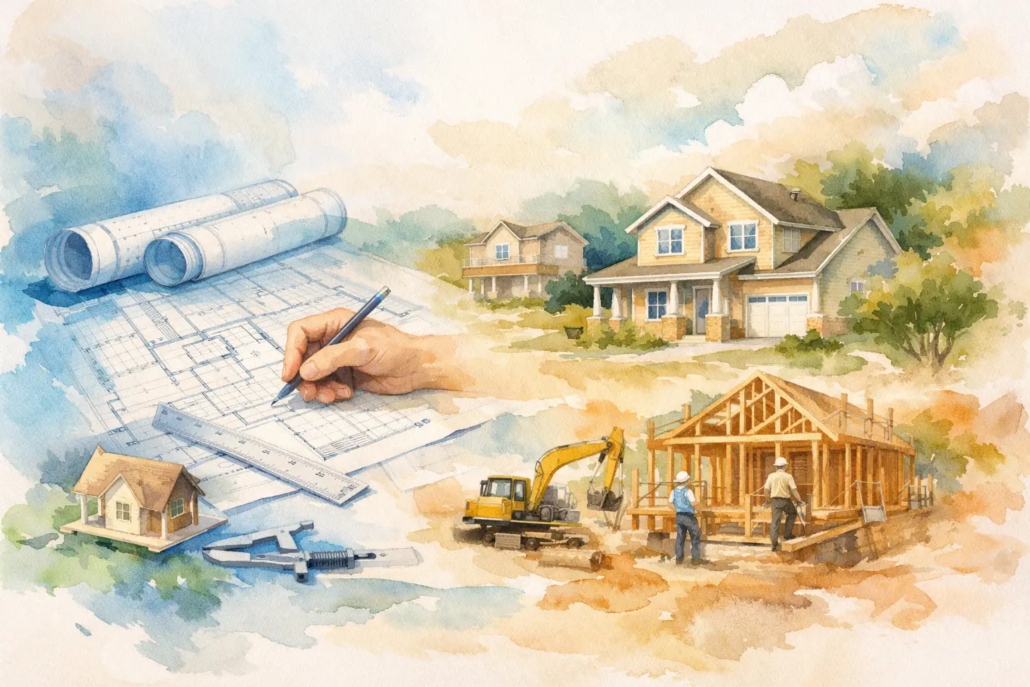
A builder chasing momentum cannot afford to wait around for concept sketches that miss the mark. That is exactly why builders use our plans on a monthly basis – they need design stock that is ready to work, editable when required, and strong enough to impress clients who are tired of bland project homes and need differentiation in the marketplace.
For small to mid-sized residential builders, the pressure is constant. You need fresh unique standalone concepts to win jobs, but you also need control over cost, turnaround and intellectual property. Relying on a draftsperson or architect for every early-stage concept can slow the whole sales process. A smarter model is having access to a proven library of original home plans and editable CAD or DWG files that can be adapted for different blocks, buyer briefs and façade preferences without starting from scratch every single time.
Why builders use our plans on a monthly basis
The answer is not mysterious. It is commercial. Builders need volume, flexibility and speed, but they also need plans that look like they belong in the current market rather than outdated. A monthly arrangement makes sense when you are quoting regularly, presenting concepts often, and want a broader pipeline of design options sitting within reach.
Our design approach has never been about cookie-cutter boring bland dressed up with a fashionable façade. We think from the roofline down, because style should not be an afterthought. That produces a stronger presence symmetry, cleaner street appeal and internal layouts that feel brighter and more liveable. For builders, that matters. A plan that looks sharper in presentation often gets stronger buyer engagement before price even becomes the main conversation.
There is also a practical side. Editable files save time. If a client wants the kitchen opened up, a rear verandah adjusted, or a garage width reconsidered, that is a manageable design exercise rather than a complete redraw. The faster you can move from interest to tailored concept, the better your chances of holding the job.
Monthly access works because building sales move fast
A one-off plan purchase can suit a builder with an occasional custom enquiry. But if your team is regularly quoting in places like Brisbane, the Gold Coast, Newcastle or the Sunshine Coast, one plan here and there can become limiting. Monthly access gives you an active working library rather than a single answer to a single brief. We have done the groundwork preparation enabling less admin you end so you can attend to things that matter like being in the job.
That changes the sales conversation. Instead of telling a client you will come back in a week or two with something drawn up, you can start with a base design that already has design intelligence behind it. You are not showing a rough sketch. You are showing a real home concept with shape, proportion and practical flow as well as its structured layout.
This is where variety matters. Not every client wants the same thing. Some are chasing acreage scale. Some want a courtyard layout with privacy and natural light. Some need a compact first home that still feels generous. A strong plan library enables unique variety and gives builders a better chance of matching land, budget and lifestyle without forcing unsuitable plans onto a block.
Take our Homestarter example, Campaign 182. It proves that compact does not have to mean compromised. With a genuine 5 living rooms, 2 bathrooms, a 2-car garage, rear verandah and front porch within a cleverly compact designed 182m² footprint, it gives builders a smart response for buyers who want value without living in a box. That kind of plan helps sales staff speak with confidence because the design itself already does some of the heavy lifting and provides a sales point appealing unique edge to go to market.
For buyers wanting a more boutique feel, the Casa Evangelista (https://pacificdesignerhomes.com.au/product/casa-evangelista-213/) creates a different pitch entirely not in the same same category styled by other builders. A builder with access to multiple ranges is in a better commercial position than one trying to stretch the same tired formula across every job.
Design quality is not a side issue
A lot of plan libraries are technically usable but visually forgettable. That is where builders can lose ground. If the layout reads flat, drab outdated, if the hallways drag, or if the living spaces feel buried in the middle of the home, the concept becomes harder to sell.
We try to avoid dark corridors and dead-end planning because they reduce the emotional impact of the home. Open plan living, cleaner circulation and a stronger relationship between form and function help builders present homes that feel current and considered and engage that emotive connection. Clients might not use design jargon, but they know when a plan feels awkward. They also know when a home feels fresh.
That difference is often what separates a generic lead from a signed contract.
Editable files give builders room to move
The monthly model only works if the files are actually useful. With a vast design library portfolio we can cater styles to work local in your area. That means editable CAD and DWG access, not just static drawings that create extra cost every time a client requests a change.
For builders, editable files mean your internal team or preferred consultants can refine a plan to suit frontage, orientation, movement of the sun, local overlays or client-specific requests or local authority requirements. It also means less duplication. You are not paying to redraw common-sense changes over and over again cause we provide the concept/s to start with enabling you to modify design/s.
Of course, flexibility does not mean a free-for-all. Intellectual property matters, and serious builders understand that. Clean licence arrangements protect both sides. You know what you can use, how you can use it, and whether a monthly subscription, single-plan purchase or broader builder licence agreement is the right fit for your business model.
That legal clarity is not admin fluff. It protects the value of design work and helps builders operate without grey areas hanging over future use.
It depends on how your business sells
Not every builder needs the same setup. If you are doing occasional custom work, purchasing individual plans may be enough. If your business handles regular enquiries and likes to present multiple concept options before contract stage, monthly access makes more commercial sense.
There is also the question of brand positioning. Some builders want a design library to support a lean sales process and reduce external drafting costs. Others want it as a way to sharpen their market presence with more distinctive homes. Some may even need broader licence or franchise-style arrangements to scale consistently across several regions.
The point is simple. The best plan access model depends on sales volume, internal capability and how often you need fresh unique concepts on the table.
Builders use our plans on a monthly basis for more than convenience
Convenience is part of it, but the bigger value is consistency. Builders need a repeatable way to respond to enquiries without lowering design standards. A monthly plan resource gives you that rhythm.
It can shorten the path from first meeting to concept presentation. It can reduce dependence on outsourced early-stage drafting. It can improve how your business looks in front of clients. And because the plans are part of a wide portfolio, you are not boxed into one narrow design language.
This matters across very different buyer types. An owner-builder or builder on acreage land has a different brief from a first home buyer trying to make every square metre count. The Bolero 149 is a good basic design sure to appeal. A granny flat client has different priorities again. The builder who can present design options with confidence across those scenarios is simply better equipped to win work.
That is one reason the library model holds up month after month. It is not just about having plans. It is about having plans that are commercially useful.
Consider how much time disappears when every enquiry starts from zero. Now compare that with drawing from a portfolio refined over years, with more than 3,600 designs developed and a broad site selection already in place. That scale gives builders a practical edge, especially when buyers want something original but still buildable.
For teams working across Australia and taking enquiries from New Zealand or the USA as well, speed and originality are not optional extras. They are part of staying competitive. Buyers have more choice, more visual references and less patience for stale layouts. Builders who respond with sharper concepts are better placed to convert interest into deposits.
The smarter play for builders who want fresh stock
If your business is serious about reducing lead time, improving concept presentation and keeping control over design costs, a monthly plan arrangement is not an indulgence. It is a working tool. It gives you access to original ideas, editable files and licensing pathways that can suit a one-off need or a bigger growth strategy offering appealing flare to go to the marketplace.
Strong builders do not win by offering more of the same. They win by showing homes with presence, practical flow and enough flexibility to suit real clients on real sites. That is why this model keeps making sense.
See the full portfolio and find the right design fit at https://pacificdesignerhomes.com.au/
The right plan does more than fill a block – it helps your business sell the next job with less friction and a lot more confidence.

