

What Is Modern House Design?
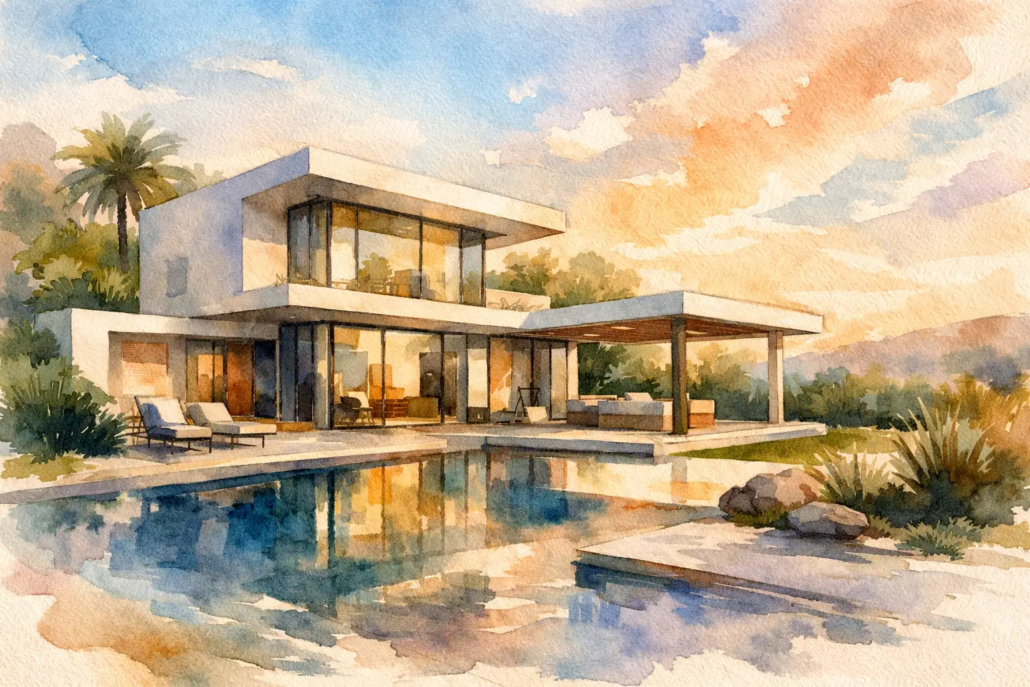
A lot of houses get called modern simply because they have a dark façade, a square window and a fancy front door. That is not enough. If you are asking what is modern house design, the real answer sits in how the home looks, how it flows, how it handles light, and how well it supports the way people actually live now.
Modern house design is not decoration pasted onto a standard plan. It is a design approach built around clean form, strong proportion, practical open living, reduced visual clutter and a sharper connection between indoor and outdoor space. When it is done properly, it feels fresh without trying too hard. When it is done badly, it turns into a cold box with no warmth, no logic and no staying power.
What is modern house design really about?
At its core, modern house design strips away the tired extras that make many project homes feel dated before the paint is even dry. It favours simplicity, but not emptiness. It pushes for visual impact, but not chaos. The goal is a home that feels deliberate.
That usually means cleaner rooflines, less ornamental fuss, bigger glazing, stronger geometry and layouts that prioritise usable space over wasted corridors and awkward formal rooms. The modern home is typically designed around lifestyle first. People want kitchens that connect to living areas, better privacy between bedrooms, stronger outdoor integration and spaces that work for families, visitors, work-from-home needs and changing routines.
This is where many buyers get confused. Modern does not mean one fixed look. It can lean minimalist, coastal, industrial, resort-style or high-end contemporary. The common thread is clarity. Every line, space and feature should feel like it belongs there.
The key traits of modern house design
The visual side is usually what people notice first. Modern homes often use simple massing, large windows, mixed materials and a restrained palette. You will see render, cladding, feature brick, concrete-look finishes, timber accents and metal detailing used with more discipline than in older styles. Instead of piling on detail, a modern house uses contrast and proportion to create presence.
Inside, the shift is even more important. Modern layouts tend to be more open, but open-plan does not mean one giant hall with furniture floating in it. Good modern design creates zones without choking the home with walls. A kitchen might anchor the centre, a living area might open to an alfresco, and a second lounge or retreat might sit far enough away to give people breathing room.
Ceiling heights, natural light and storage also matter. A modern home should feel easy to move through. That might come from a wider hallway, a courtyard drawing light into the middle of the plan, or a better relationship between garage entry, pantry and kitchen. These are not flashy features, but they are exactly what separates smart design from bland stock-standard planning.
Why modern homes appeal to buyers and builders
For home buyers, modern design offers a home that feels current, functional and visually stronger than the same same product pushed across too much of the market. People do not just want shelter. They want a house that reflects their taste, suits their block and works harder for everyday life.
For builders, modern house design has a commercial edge when it is handled well. It helps differentiate your offering, gives sales teams something sharper to present and can lift perceived value without relying on gimmicks. A well-drawn modern concept can also be adapted across different lot widths, site conditions and façade treatments, which makes it far more useful than a one-note design with no flexibility.
That said, modern design is not automatically cheaper or easier to build. Cleaner forms can still hide construction complexity. Large spans, oversized glazing, custom details and dramatic voids all need discipline. If the concept is not practical, the numbers can blow out quickly. Strong modern design finds the balance between visual punch and buildable reality.
What is modern house design in practical terms?
In practical terms, modern house design is a response to how people live now, not how they lived thirty years ago. Formal dining rooms that sit unused most of the year have given way to multi-use family zones. Tiny poky kitchens have opened up. Outdoor living is treated as part of the home, not an afterthought. Bedrooms are expected to offer privacy and robe space. Bathrooms need to work harder. Laundry planning matters more than most people admit.
Modern design also responds to block challenges better than many older plan styles. Narrow lots, rear-lane access, sloping sites, corner blocks and acreage living all call for different solutions. A genuine modern concept is not just one façade repeated on every site. It should adapt to orientation, outlook, privacy issues and access patterns.
This matters whether you are a builder sourcing concepts at scale or a buyer choosing a plan to develop further with your own building professional. The right design should give you a strong starting point, not a mess to fix later.
Modern does not mean ultra-minimal
One of the biggest myths around modern housing is that it has to feel stark. It does not. Some modern homes are crisp and minimal, but others are warm, layered and family-friendly. Timber, texture, courtyard planting, soft finishes and smart zoning can make a modern home feel grounded rather than sterile.
The same goes for size. A modern house does not need to be huge. In fact, some of the best modern plans are compact and efficient because the layout is doing the heavy lifting. Good proportion beats wasted square metres every time.
This is especially relevant in Australia, where block sizes vary wildly and budgets are under constant pressure. A flashy oversized home with poor orientation and weak planning is not better design. It is just more expensive disappointment.
The difference between modern and contemporary
People often use modern and contemporary as if they mean exactly the same thing. In everyday property talk, that is common enough. In design terms, there is a slight difference.
Modern design refers to a recognised design language built around simplicity, functionality and clean form. Contemporary design usually means what is current right now. There is overlap, and a lot of new homes blend both, but the key point is this: not every new house is genuinely modern, and not every modern-looking façade has a modern plan behind it.
That is why the floor plan deserves as much attention as the front elevation. A house can look sleek from the street and still fail badly inside if circulation is clumsy, light is poor or the living zones do not make sense.
Where modern house design can go wrong
There is plenty of bad modern design in the market. You have probably seen it. Flat-looking façades with no depth. Oversized windows in the wrong places. Boxy forms with no warmth. Floor plans that chase trends but forget privacy, storage or furniture placement.
The issue is not the style itself. The issue is lazy execution. If modern design becomes a formula, it ends up just as boring as the dated housing it claims to replace.
A stronger approach is to start with the site and the user. How wide is the block? Where is the sun? Is privacy a problem? Does the client need a home office, a guest zone, a granny flat connection, split-level planning or a better garage relationship? These questions shape better modern homes than façade trends ever will.
Why editable concept plans make sense
This is where professionally prepared concept plans have real value. A strong concept gives buyers and builders a fast, cost-effective starting point with design thinking already built in. Instead of paying from scratch for every early idea, you begin with a layout that has been resolved with more care than the average generic stock plan.
For builders, that means speed, variety and less dependence on reinventing the wheel for every lead. For buyers, it means access to fresher designs that can be refined by qualified local professionals to suit engineering, council, siting and construction requirements.
That flexibility matters. No concept plan should be treated as a free-for-all or used outside its licence conditions, but a properly licensed, editable CAD-based design system gives the market something far better than bland repetition. It gives you a design resource with room to adapt.
At I Love That Design, that is exactly the point. Modern housing should not be a parade of recycled boxes dressed up with trend colours. It should be visually distinctive, commercially smart and practical enough to become a real home.
So, what should you look for?
If you are choosing a modern house design, look past the sales image. Study the plan. Check how the home addresses the block, where light enters, how private the bedrooms are, whether the kitchen is actually functional and how indoor living connects to outdoor space. Ask whether the design will still feel right in ten years, not just on handover day.
The best modern homes do not scream for attention. They hold it because the design has been thought through. They are cleaner, sharper and more liveable. And in a market flooded with forgettable housing, that is exactly the kind of difference worth paying attention to.

