

Are Stock House Plans Cheaper in Australia or Worlwide?
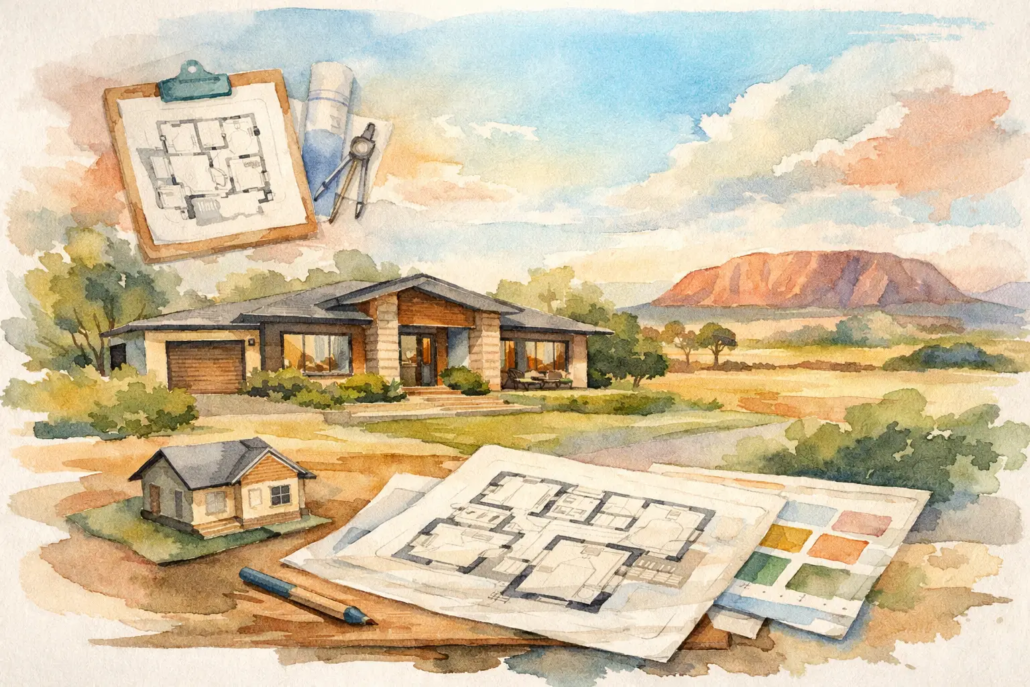
If you’re pricing up a new home and asking are stock house plans cheaper, the short answer is yes – usually. But the real answer is more commercial than that. A stock plan is often cheaper to buy than commissioning a one-off custom design from scratch, yet the total value depends on how much reworking the plan needs, how clear the licence terms are, and whether the layout is actually buildable on your site.
That matters whether you’re a builder in Brisbane trying to move faster on client presentations or a landowner in Newcastle wanting a sharper design without paying custom-design money upfront. Cheap on paper is one thing. Cost-effective in the real world is another.
Are stock house plans cheaper for builders and buyers?
In most cases, stock house plans are cheaper at the concept stage because the heavy lifting has already been done, chiefly the style layout flow of shape overall schematics. The floor plan exists, the room relationships are resolved, and the design language is established. You are not paying a designer to start from a blank page, explore multiple dead-end options and redraw the whole job every time the brief shifts.
For builders, that can mean quicker quoting, faster lead handling and less dependence on a draftsperson for early concepts; importantly it gives you a plan portfolio to go to your local marketplace. For home buyers, it can mean access to a stronger layout and better street appeal without the full cost of a bespoke design service.
Where people get caught is assuming every stock plan is automatically cheap in the final build. It isn’t. If the design is bland, poorly resolved or loaded with awkward spaces, any saving at purchase can disappear once changes begin. That is why the layout matters far more than brochure fluff. A unique smart stock plan should already feel considered, not generic.
Gold Coast or Sunshine Coast or Cairns buyers often save most when the plan needs fewer changes
The biggest price advantage comes when you choose a design that already suits your block, lifestyle and budget. If you’re on a standard lot on the Gold Coast or in a newer estate around Sydney’s fringe, a well-matched stock plan can save serious time and money because you are adapting, not inventing.
If, however, you buy a plan for a narrow block and then try to force it onto a wide acreage site, or you need major structural changes, facade changes and room relocations, the maths shifts. You may still spend less than on a fully custom concept, but the gap narrows.
That is why good buyers and smart builders do not start with the cheapest plan. They start with the right plan.
A few examples show the difference. A narrow-lot buyer looking at the Abruzzi 227 https://pacificdesignerhomes.com.au/product/abruzzi-227/ from the Narrow Courtyard range may find the design already solves privacy, light and flow in ways that reduce redesign costs. An acreage client may get better value from the Eventful 244 https://pacificdesignerhomes.com.au/product/eventful-244/ from the Acreage range because the proportions and zoning are already tailored to that style of living in a purposeful strong bold package. And for compact secondary dwellings, the Savoy 148 https://pacificdesignerhomes.com.au/product/savoy-148/ from the Granny Flat/Garage at Rear range can make more commercial sense than trying to custom-design a small home with every square metre contested.
What makes a stock plan genuinely cheaper?
A stock plan becomes genuinely cheaper when it cuts design time without creating construction headaches. That sounds obvious, yet many people compare only the upfront drawing fee and ignore the more expensive parts downstream.
Builders in their bill of quantities to each house price in builder portfolio detailing costings, should include a base drafting fee of a possible $1,200+ AUD allocated towards their drafting costing to start with. We already have the concept base done to enable any plan changes depending upon factors such as client changes, site or local authority requirements to be fast-tracked from pre-prepared plan we provide you with.
The first saving is speed. When a plan is ready to review now, you can move into pricing, sales discussions and feasibility faster. Builders know this is where momentum matters. A client who waits weeks for a concept may drift. A client who sees a strong plan today is far easier to convert.
The second saving is predictability. A proven layout usually gives a clearer starting point for estimating. Room sizes, circulation, roof form and general massing are already visible. You are not trying to cost a vague wish list.
The third saving is editability. This is a major one. If the plan comes with editable CAD or DWG capability, changes can be handled more efficiently than re-drawing from scratch. For builders, that can be the difference between using a design library as a real business asset or just buying static artwork.
Brisbane and Newcastle projects – where stock plans can cost more
There are situations where stock plans can end up costing more than expected. Sloping sites, unusual overlays, bushfire constraints, flood requirements, engineering complications and strict estate covenants can all drive changes. In those cases, the stock plan is still useful as a starting schematic, but it is not the whole cost story.
Another issue is licensing. This is where commercial reality kicks in. A cheap plan with vague or restrictive usage terms may be poor value for a builder who wants repeat access, area protection or editable files. By contrast, a plan with clear pricing and proper intellectual property conditions can be worth more because it protects how the design can be used.
That matters especially for smaller builders in places like Brisbane, Penrith or the Sunshine Coast who need fresh concepts regularly but cannot justify custom design fees for every lead. If you’re comparing prices, compare the rights as well as the drawings.
Why custom still has a place
Custom design is not the villain here. It has a clear role. If your site is highly unusual, your brief is deeply specific, or your market needs something no existing layout can satisfy, custom may be the better investment.
But plenty of people pay custom fees for problems a strong stock plan could have solved from day one. That’s where money gets wasted. Not on design itself, but on unnecessary reinvention.
A commercially sharp approach is to start with a plan library that already covers different living styles and lot conditions, then modify only where needed. That gives you design confidence without paying for every line twice.
Are stock house plans cheaper when style matters too?
Yes, if the design library is actually worth buying from. This is where the market splits. Some stock plans are cheap because they are tired, clunky and full of dark hallways, leftover corners and lazy room placement. They may save money upfront, but they do not help you sell the dream, win the client or enjoy the home.
A stronger stock plan should already feel modern like the Mondrian 241 from the Modern Range https://pacificdesignerhomes.com.au/product/mondrian-241/ in the way it lives and have a definitive bold look to it. Better alignment, cleaner open-plan flow, more intelligent zoning and a roofline considered from the start all add value long before construction begins. Good design does not stop being good because it sits in a catalogue.
For buyers chasing a boutique feel without going fully bespoke, boutique ranges like Casa, Villa offer that trendy upscale dynamic style, for example the Villa Moderne 223 from the Villa Range offers a stylish savvy bold style that may appeal; https://pacificdesignerhomes.com.au/product/villa-moderne-223/, or other ranges such as Modern, Homestarter/Corner Block, Narrow Courtyard and Acreage can offer a much smarter middle ground by offering a broad selection to go to the marketplace. The point is not to buy a generic shell. It is to choose a design with enough punch and practicality that it stands up on its own, then tailor it where it counts.
The smarter way to compare plan costs
If you really want to know whether stock house plans are cheaper, compare four things instead of one purchase price. Compare the initial plan fee, the likely cost of modifications, the value of the usage rights, and the time saved getting to quote or approval. That gives you a truer reading of value.
For builders, the smartest buy is rarely the lowest advertised number. It is the plan that helps you present faster, sell easier and build with fewer surprises. For owner-builders and home buyers, the best value is usually the plan that already fits your land and lifestyle closely enough that changes stay controlled.
That is why stock plans continue to make commercial sense across Australia. Used properly, they reduce wasted design spend, accelerate decisions and give you a more polished starting point than a blank sheet ever will.
See More Daring Designs That Break Free from the Boring and Bland
If you want a refined unique answer than guesswork, explore the full portfolio at https://pacificdesignerhomes.com.au/ and start with a design that already does more of the work for you. The Best Move You’ll Ever Make!

