

Modern Residential Home Designs for Queensland Families
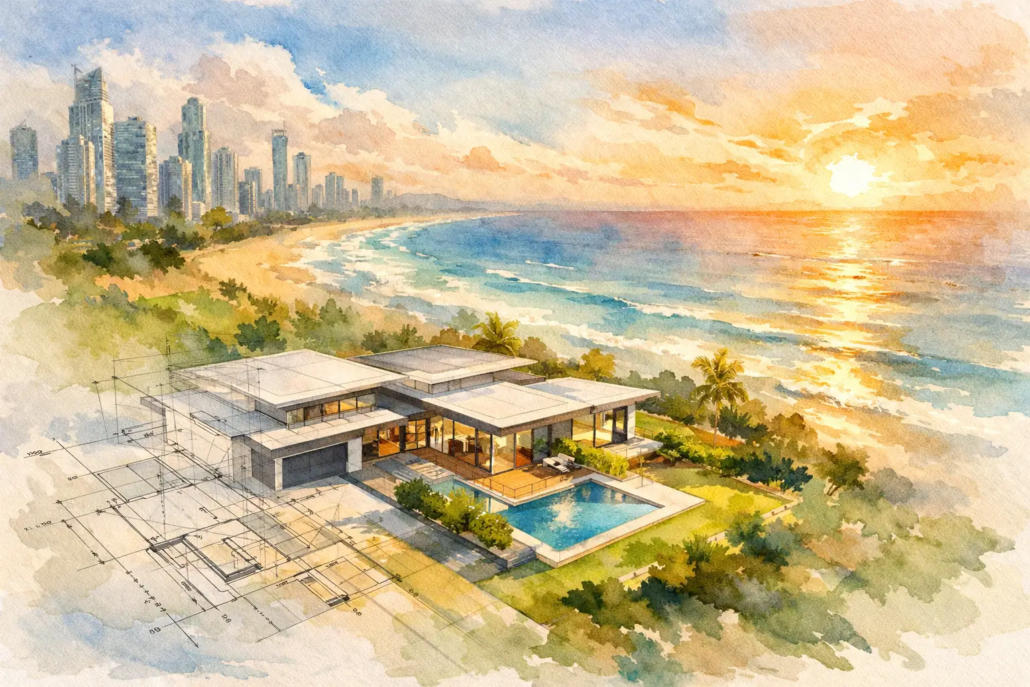
Queensland family life puts a house to the test fast. One week it is humid and stormy in Brisbane, the next it is dry heat further north, and all year round the home has to handle school bags, weekend visitors, muddy feet, growing kids and the very real need for airflow that does not rely on blasting air-conditioning all day. That is why modern home designs for Queensland families cannot just look sharp on a brochure. They have to work hard where it counts – in the layout, the orientation, the liveability and the way every square metre earns its keep.
Why modern home designs for Queensland families need more than a pretty facade
Too many homes still chase a front elevation first and hope the floor plan sorts itself out later. That is where bland project thinking usually falls apart. A stunning facade doesn’t count for much if the roof lines are plain with little variation, the hallway feels dark, the kitchen is cramped, pinched cramped rooms, cupboard space is limited, the pantry is tiny and the alfresco seems like an afterthought.
Queensland families usually need the opposite. They want open living that feels airy, bedrooms with sensible separation and ample sized, indoor-outdoor flow that actually gets used and a floor plan that makes the home feel bigger than its footprint. The smart move is starting with the schematic layout, because that is the part you live with every day. Rooflines, facades and visual drama still matter, but they should reinforce the plan rather than disguise a weak one.
This is where contemporary design earns its place. The best modern homes blend alignment, proportion, and free-form symmetry to create a sense of flow throughout the layout, while introducing a distinctive dynamic design language in the tactile placement of walls to achieve a certain ambience with clarity of how the plan flows. That sounds technical, but the outcome is simple – fewer dead zones, less wasted corridor space and better connections between kitchen, living, meals and outdoor areas.
Brisbane to Cairns – climate should shape the floor plan
Queensland is not one single design environment. A family building on the Gold Coast may prioritise entertaining and pool connection. A buyer in Rockhampton or Gladstone might focus on heat control and privacy. In Cairns, breezeways, shade and practical transitions between indoors and outdoors carry even more weight.
That means there is no one-size-fits-all answer, and frankly, cookie-cutter plans are the wrong fit for most sites. Modern design in Queensland should respond to orientation, block width and lifestyle. On a narrower suburban lot, you may need a courtyard move that borrows light into the centre of the home. On a wider site, you might spread the living zones and create stronger separation between the children’s wing and the main suite.
A good example of contemporary thinking on a tighter footprint is the Genre 229. In the Narrow Courtyard range, this kind of concept can pull daylight deeper into the floor plan while keeping the home private from close neighbours. That is a far smarter Queensland response than simply stacking rooms along a long internal hall. The living areas boast an open-plan layout, thoughtfully crafted to break free from traditional, uninspired design.
What Queensland families actually need from a modern layout
The family brief has changed. People still want open-plan living, but they also want escape zones, storage, privacy and flexibility. Parents are working from home more often. Teenagers want distance without feeling disconnected. Grandparents stay over. Adult kids come back. Modern planning has to absorb all that without becoming bloated or clumsy.
In practical terms, that often means the kitchen sits as a true command centre, not tucked into a corner. It means the alfresco is connected to daily life rather than bolted on. It means the main bedroom is positioned for retreat, while children’s bedrooms are grouped in a way that makes supervision easy when kids are young and separation easier as they grow.
The right acreage plan can do this brilliantly when the site allows it. The Coventry 237 from the Acreage range shows how wider planning can create breathing room without losing cohesion. For Queensland families who are building outside denser suburban pockets, that sort of layout can turn land size into a genuine lifestyle gain rather than just extra mowing.
For first-home buyers or sharper budgets, the answer is not to shrink everything until it feels compromised. It is to cut the waste. The Ashton 108 from the Homestarter/Corner Block range is the kind of example that proves affordable small homes do not need to be dull. Strong planning decisions can still deliver light, flow and street appeal without throwing money at meaningless extras.
The best modern homes handle trade-offs honestly
There is no perfect plan for every family, because every design choice has a trade-off. A huge open living zone can feel spectacular, but if it swallows too much floor area you may lose bedroom size, storage or a proper media room. A dramatic pavilion feel can create wow factor, but it may also push up construction complexity depending on the builder and site.
That is why smarter design is not about packing in every trend. It is about knowing what matters most for the household and making the plan work around that. Some families will put a big walk-in pantry high on the list. Others would rather have a study nook near the kitchen, or a rear garage arrangement that frees up the streetscape.
The Granny Flat/Garage at Rear range can be particularly relevant here, especially for families thinking long term about guests, adult children or rental flexibility. The Granny Flat example being the Carlton 60 is the sort of concept that can open up options on urban sites where frontage presentation matters and usable rear accommodation adds value. Micro living does not need to be outdated design.
Modern home designs for Queensland families should feel fresh, not forced
A lot of so-called modern homes still fall back on tired planning habits. You see oversized voids in the wrong place, chopped-up circulation, awkward furniture walls and facades trying far too hard to distract from what is missing inside. A fresher approach is more disciplined. It uses bold geometry, but it also respects furniture placement, sightlines, natural light and daily routines.
That is why range style matters. A dedicated Modern range can deliver crisp contemporary appeal, while a softer Villa or Casa approach may suit buyers wanting boutique personality without the harshness that some modern facades can drift into. The point is not to force every family into the same aesthetic. The point is to match the design language to the way they want to live.
The Burleigh 227 from the Modern range is the obvious place to start for families chasing cleaner lines and a stronger architectural savvy edge with its appealing beachie edge to its outdoor entertainment area. For those wanting a more refined resort feel, the Villa Castrovillari 214 from the Villa range can offer a different sassy mood while still keeping contemporary planning principles intact. And if your taste leans towards polished warmth with a boutique edge, the Casa Portcello 214 from the Casa range is another strong reference point with its bold dynamic fresh style.
Builders need point of difference, not another recycled plan
This topic is not just for owner-builders and landowners. Residential builders across Queensland are under pressure to offer homes that sell faster and stand apart. If every display and every plan looks like a slightly edited version of the next one, the market notices. Buyers notice too.
Exclusive design rights in a local area can make commercial sense because they stop your offering from being diluted by repetition. Editable CAD and DWG access also matters for builders who need efficient customisation pathways rather than redrawing from scratch every time a client wants changes. That is not just a design issue. It is a margin, speed and sales issue.
Pacific Designer Homes has built its model around that commercial reality, giving builders and buyers access to a broad plan library with stronger differentiation than the old-school volume formula. For Queensland operators trying to stay fresh in competitive corridors like Brisbane, the Sunshine Coast or the Gold Coast, a better plan mix can be the difference between blending in and standing out.
What to look for before you buy or build
The smartest modern home design is the one that suits your block, your climate and your household pattern – not the one with the loudest facade. Look closely at how people move from the garage to the kitchen, whether the living zone gets natural light from more than one side, and whether bedrooms are placed with purpose. Check if the alfresco is truly integrated, if storage is believable and if the plan avoids long gloomy passageways.
For builders, the extra test is whether the design gives you a saleable point of difference in your patch. For families, it is whether the home will still feel right in five or ten years when routines change. Strong planning is not about chasing fashion. It is about making daily life easier while still delivering that hit of excitement when you pull into the driveway.
See smarter Queensland-ready design options
If you are done with bland, dated layouts and want plans with sharper thinking built in from the start, Explore our full design library.

